HOLIDAY TRADITIONS | JEWISH TRADITIONS
Hanukkah, which takes place in November or December, commemorates the re-dedication of the temple in Jerusalem after its desecration in the Maccabean Revolt.
This symbolized the resilience and triumph of the Jewish people in deeply challenging circumstances. A prominent aspect of the tradition’s narrative is the miracle of how a small amount of oil intended to last just one night somehow sustained a menorah’s flame for eight days.
THE MENORAH
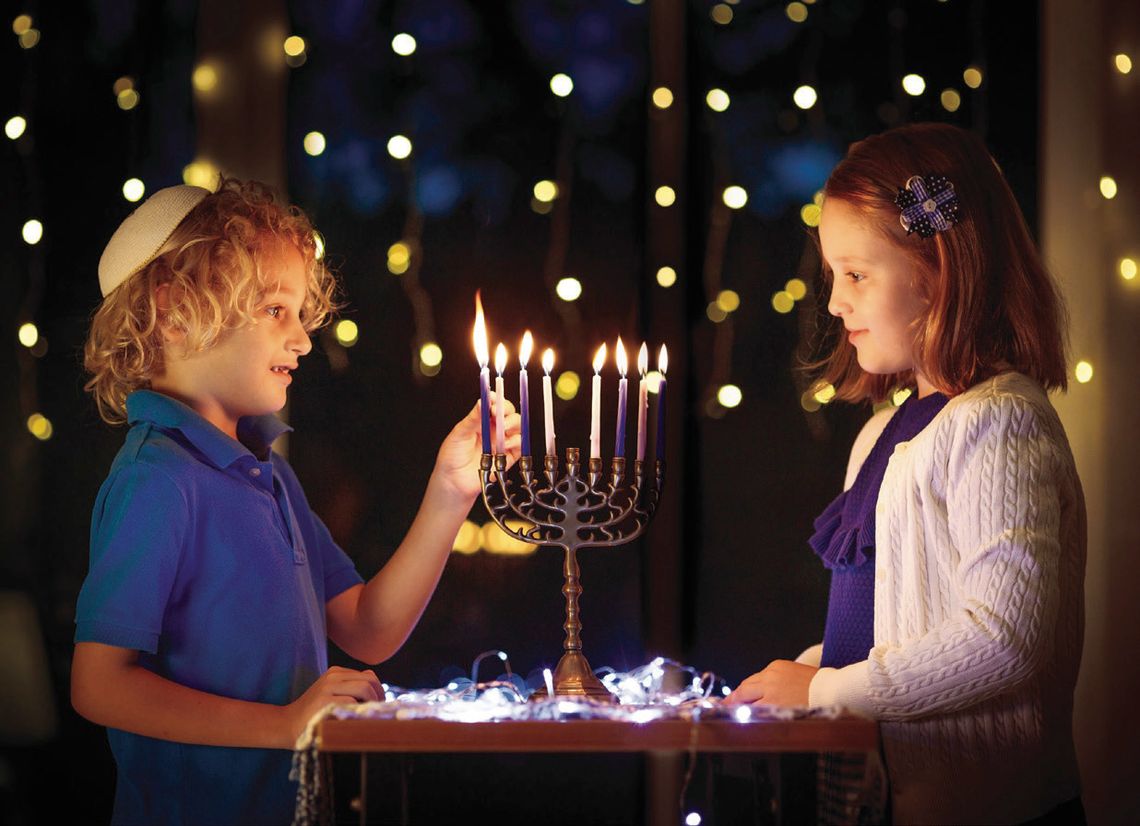
One of the most recognizable traditions associated with Hanukkah is the menorah, with its eight candles. One additional candle, known as the shamash, is used to light the others. This practice originated in Eastern Europe during the 1700s, as candles offered a more economical and cleaner source of illumination compared to traditional oil lamps that were prevalent in the Middle East centuries earlier. The adoption of the menorah in synagogues can be traced back to German communities, where this tradition initially gained popularity.
Latkes, which are potato pancakes, emerged as a significant part of Hanukkah celebrations in the mid-1800s, coinciding with the increased prevalence of potatoes in Eastern European diets. These culinary delights provided a convenient option for those who sought to celebrate the festival with readily available ingredients rather than homemade preparations. In the Middle Ages, latkes were made of cheese and grains.
CHOCOLATE COINS Chocolate gelt, or foilwrapped chocolate coins, are part of a traditional Hanukkah celebration, though where the tradition came from is unknown. In the early days in Yemen, Jewish mothers may have given their children a coin on each day of Hanukkah to buy sugar and red food coloring to make holiday wine.
Another possibility is from 19th Century Eastern Europe, when rabbis went from town to town to give Hebrew lessons and were paid with food like whiskey, grain or honey.
THE DREIDEL
This spinning top game may have come from a game from the 1500s that was played in Ireland and then moved to Germany. “Dreidel” is a Yiddish word but the top also had other names, including “varfl,” which means “something thrown.” The four letters on each side of the top are now thought to symbolize the Hebrew words for a “great miracle happened there.” This later evolved into different wording that shared game instructions.