OPINION
I’ll never forget the first time I climbed Half Dome in Yosemite Valley, California.
After waking up in the early morning hours after a restless night under the stars, a friend and I started the hike to the base of the iconic rock formation.
It had taken me years of rock climbing to even consider being at this point, and I was finally roping up to take on what’d be my most challenging climb yet.
The route I chose was not the most difficult, but it was plenty difficult for me, featuring long sections with zero protection if I were to slip and fall.
I remember thinking to myself, don’t think about that. Just go.
So, I did, and after several hours of sweaty palms, shaking legs, and gripping to the rock like I was trying to crush it with my bare hands, the two of us scrambled up the last few feet for our triumphant ascent.
But, here’s the thing about Half Dome: There’s a walkable trail going up the other side.
When we reached the summit, we were met by a group of tourists gawking at us like we were caged animals, snapping photos and murmuring to themselves.
One of the tourists spoke up and said, “You know there’s an easier way up, right?”
My friend and I chuckled for a moment before realizing that he wasn’t joking. He thought we’d gotten lost and didn’t know we could’ve just walked to the top.
You’d be surprised how many people think like that. Or, maybe you wouldn’t— we see it all the time in many forms.
Working in a creative industry, AI comes up more times that I can count. Everyone talks about how much easier it’s going to make our lives, how much more quickly we can get tasks done and how many more tasks we can add to our to-do list.
In all honesty, I might punch a hole in a wall if I hear the letters “A” and “I” ever again, but I also believe it points to a fundamental shortcoming in our collective mindsets.
Why are we trying to make everything so dang easy?
A few years back, I read a book called “The Coddling of the American Mind” by Jonathan Haidt.
The entire book argues that we’re doing too much to protect our children, we’re making life too easy for people and we’re not preparing them for life in general.
“Teaching kids that failures, insults and painful experiences will do lasting damage is harmful in and of itself,” Haidt writes. “Human beings need physical and mental challenges and stressors or we deteriorate.”
One group of people who know this firsthand are hunters and anglers.
When you think about it, our entire experience is designed around making things difficult.
We all started out on bobbers and worms, but most graduate to conventional tackle, and some pick up a fly rod—each method becoming more challenging and involved.
The same is true for hunting.
Many kids start out hunting squirrels with a .22, and then take on hunting whitetails with a rifle, followed by archery and so on. Of course, these examples aren’t true for everyone, but they are common. We don’t do things in spite of them being difficult. We do them because they’re diffi cult.
It keeps us healthy. It keeps us sharp. It keeps us humble.
And, according to Christopher McDougall in his book “Born to Run,” it keeps us young: “You don't stop running because you get old, you get old because you stop running.”
In my opinion, the most important reason is that it teaches us.
Ultimately, I believe it matters how we do as much as what we do.
Imagine two people: one climbs Mt. Everest and the other takes a helicopter to the top.
Technically, they both achieved the same goal, but I think we can all agree that one had a vastly different— and I’d argue, more valuable— experience than the other.
If we can understand that, why can’t we understand that learning to write is more valuable than typing a prompt into ChatGPT?
Or climbing a rock face is more valuable than walking up the other side?
In an age of convenience, it’s difficult for me to see what we’re actually using all of this convenience for.
Are we getting more free time? Doesn’t seem like it.
Are we happier? Debatable at best.
Are we richer? I’m sure not.
Call me crazy, but it seems like making our lives easier is making our lives worse.
What did those tourists learn or gain by taking the easy route?
I can’t tell you that, but I know what I learned by taking the hard route.
I learned that fear has no ability to stop you; only you do.
I learned that it’s always steeper than it looks.
I learned that I can act confident even when I’m melting on the inside.
I learned how to be a little bit better on my next climb.
As we look toward the new year, seek out the things that challenge you.
Imagine the thing you’ve been wanting to do that scares you a bit.
Feel the hair stand up on your neck? That lump in your throat? The impending sense of doom?
That’s natural. It means you’re alive— and life’s way too short for taking the easy way up.
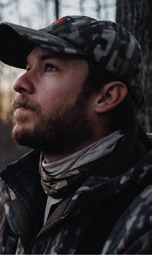
Steve Schwartz is a writer and photographer based in Aubrey. His work has been featured by MeatEater, Field & Stream, Popular Science, Game & Fish, The Fly Fish Journal, American Angler and many more. You can reach him at [email protected].