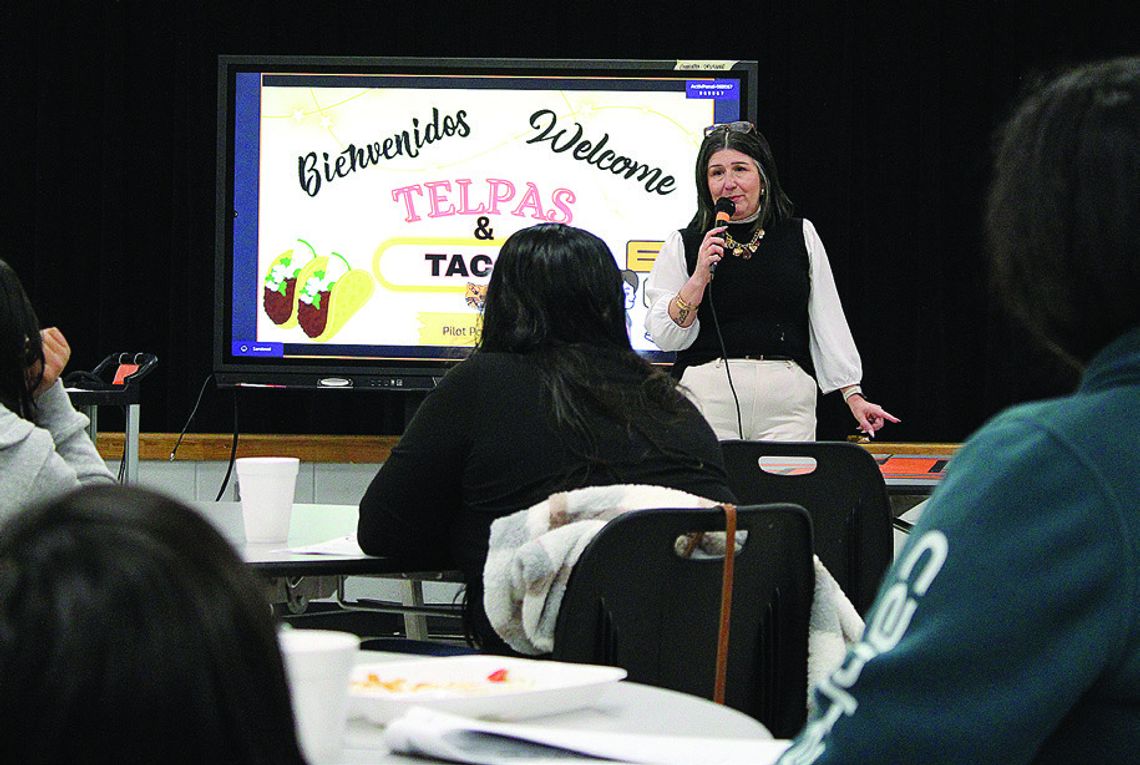
Pilot Point ISD hosted its first TELPAS and Tacos educational event on Jan. 15.
Coordinator of Special Programs Dalia Sandoval is in her second year at PPISD, and she hopes to continue such events and to eventually draw in more families.
“We know that food brings people together, so we wanted to just offer that so that they can come and they can just kind of hang out and mingle with each other, hopefully also they get to know each other, and then they just learn more about the assessment so that they can also talk to their child,” she said.
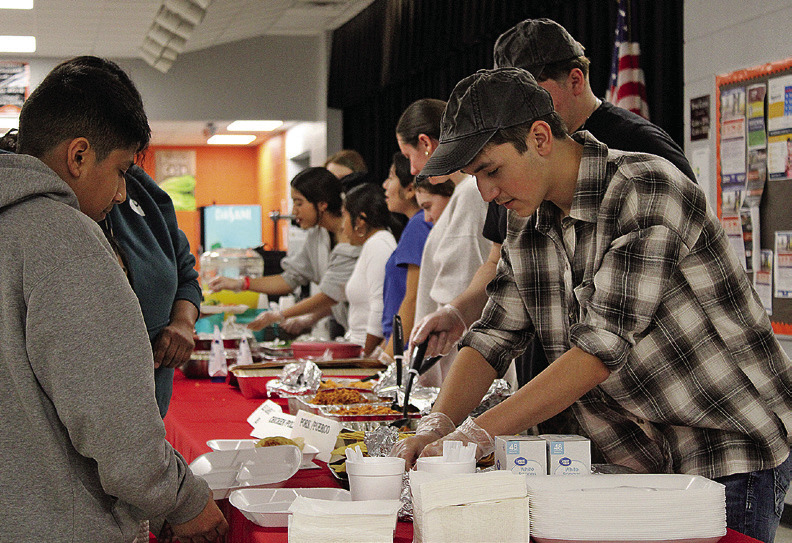
The food was provided by Judy Nelson, who teaches hospitality and tourism as well as culinary arts, and her culinary students.
The students prepared tacos, beans, rice, salsa, garnishes and horchata.
The Spanish Club helped, too, by serving the food.
“It was great to get the kids involved and to hopefully get the parents here,” Sandoval said. “That's what we want. We just want the families to come in.”
TELPAS stands for the Texas English Language Proficiency Assessment System.
Students who are placed in this system are required to take a state-required test for students who are emergent bilingual, meaning they know two languages.
“Because it's a state assessment, it also counts for accountability for the district, just like STAAR does, but this one's specifically for our emergent bilingual students,” Sandoval said.
The goal is to eventually have a student test out by proving they are proficient in writing, listening, speaking and reading in English.
At the event, they offered tips for families on how to support the children through this journey.
Backpacks with both Spanish and English books and educational material were distributed to each child, along with QR codes for students for online materials and games to practice and for parents to see how their child is doing in the program by accessing their TELPAS scores.
“We really want to get parents to know more and understand what the assessment is, why their student is assessed, what the assessment is, how their student [does], how the progress is measured and then how the student can reclassify as a non-emergent bilingual,” Sandoval
said.
For Ana Salmeron, she has her third and fourth child to be in the TELPAS program, but she’s “really not very familiar with it as much because [her son’s] more involved with the bilingual program.”
Her two oldest children, Salmeron said, were quick to test out of the program, so she wanted to learn more for her youngest two.
“What brought me out was to get educated on this for my children,” she said. “The program itself, figuring out what it all entails, and what I can do to help my children in their education.”
By the end of the event, other participants said how they found the meeting beneficial and are leaving more informed about the program than when they came in and are looking forward to the next session.
One parent mentioned that they were glad that the program is trying to set their child up for success in the future by embracing and encouraging both languages as a multilingual student.