Pilot Point ISD received a grant to fund teacher mentorship programs.
Assistant Superintendent of Curriculum and Instruction Alicia Bonnett and Director of Human Resources and Communications Valerie Wall discussed updates to the LASO Cycle 3 program grants and Cycle 4 Grant at the March 4 school board meeting.
“This truly has been the instructional focus of the year—investing in our leaders to lead— … and they've done so with flying colors,” Bonnett said.
The grant aligns with the “Big Bets” framework the school has set in place, Bonnett said, which is to invest in effective teachers and “prioritizes coaching and feedback” within the staff so that both teacher and student performance will improve.
The LASO Cycle 3 Grant has been used to implement the Bluebonnet curriculum in math throughout PPISD and to fund a partnership with the National Institute for Excellence in Teaching, as referenced in the PowerPoint presentation.
She also shared a comparison of the 2024-25 to the current midyear report.
The middle-of-the-year MAP assessment data showed a “19% increase in student growth” following the implementation of the Bluebonnet math curriculum, Bonnett said.
“When the grant ceases to exist, and the money is used up, our system should continue,” Bonnett said. “And that's really what the framework is building, is that we're building a system of success for Pilot Point in teaching math.”
The school was awarded money toward LASO Cycle 4.
Wall discussed the two parts the school had applied for: the mentor teacher and the teacher residency, which is partnering with the University of North Texas.
Student residents will complete one full academic year with in-classroom training from an assigned district teacher in co-teaching through the program.
After completion, the resident teachers will earn their teacher certificates.
The TEA Preparing and Retaining Educators through Partnerships Program allotment will be aided by providing state funding.
To be considered for the mentorship, a teacher must be “high-performing,” meet TEA standards and be willing to commit to the mentorship, Wall said.
In the role, teachers are required to provide training, feedback and co-plan.
“So, really giving them a strong foundation in education, having somebody there to rely on, to support them through those first few years, is really critical to maintaining that workforce and retention in our schools,” Wall said.
The district believes it will also benefit the mentors themselves, Wall said, “taking our veteran teachers, recognizing them for the hard work that they're doing, kind of lifting them up and elevating their position as mentors to our young teachers that are coming in.”
Wall also mentioned other benefits, including the goal of the residents falling in love with PPISD and its community, which could help with teacher retention by creating a pipeline.
Additionally, Wall explained how the student residence will receive payment.
“The state gives us $10,000 to go towards the salary of our teacher residents,” she said. “The district matches that for a salary of $20,000 for our teacher residents.”
The program benefits the university as well.
“When they get certified, so after they get a three-year residency, they get certified, the district gets additional funding, and then after their first year of teaching, the EPP, which is the Educator Preparation Program, so UNT would get funding whenever they get fully certified,” Wall said.
She told the board the district might know the individuals participating after spring break.
Also in the meeting, the board unanimously approved an adjustment to the 2026-27 school calendar to account for the homecoming football game being set for Oct. 23.
Bonnett proposed switching the student and staff holiday to Oct. 9 and the professional learning day to Oct. 23 to increase homecoming participation among the community and staff.
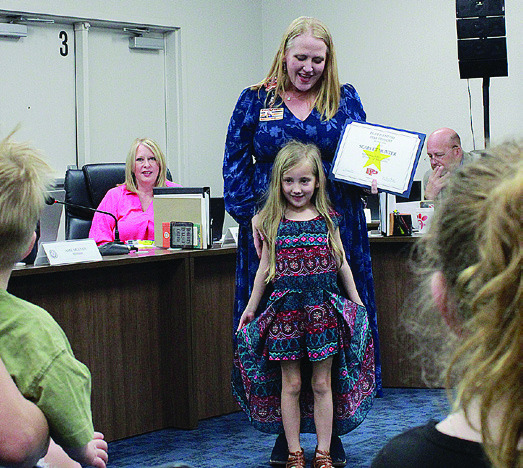
Pilot Point Early Childhood Center Principal Andrea Kenndey presents kindergarten student Scarlet Hunter with the Pilot Point ISD Star Student award. Paisley McGee/The Post-Signal