
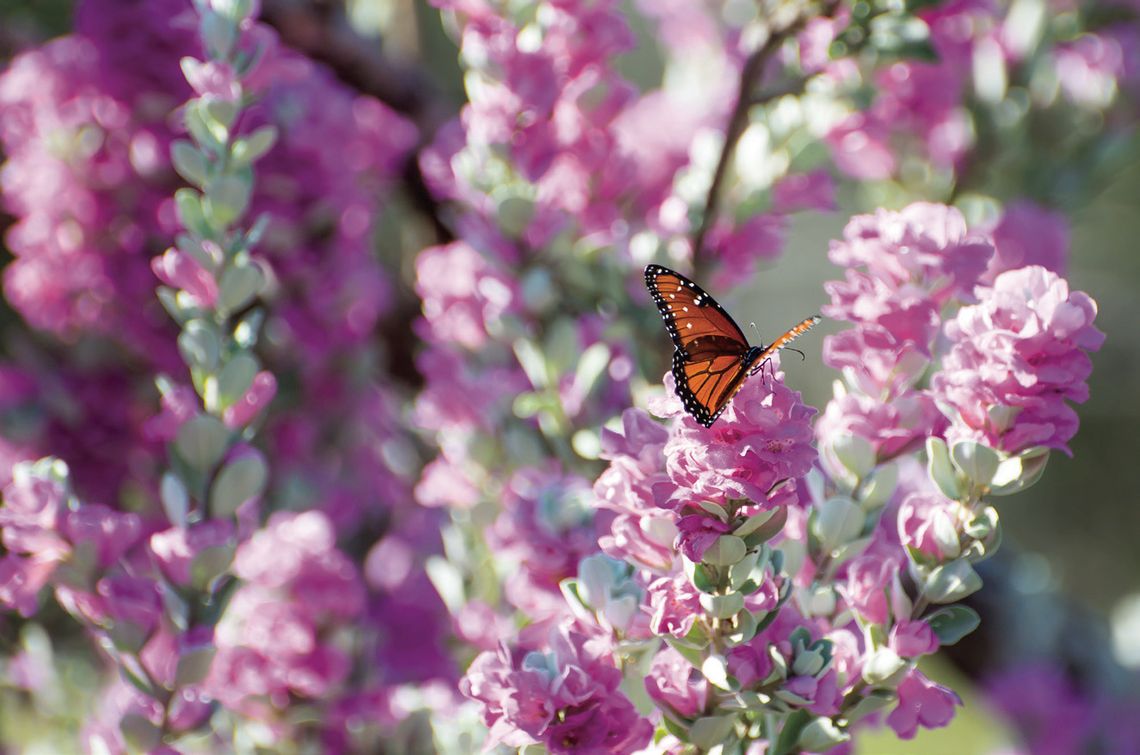
Texas sage (Leucophyllum frutescens) can be called Cenizo, Purple Sage, Texas Ranger, Texas Barometer Bush, Texas Silverleaf or Silverleaf.
A hardy native shrub, Texas sage increasingly defi nes North Texas landscapes.
Its value arises from its silvery foliage, vibrant blooms, and remarkable drought tolerance.
Texas sage lives three years or longer and blooms on its own every year.
This very low-maintenance plant performs extremely well in hot, dry conditions.
It prefers full sun and well-drained soil, but it can grow in part shade and clay soils that aren’t constantly wet.
Description
A member of the Figwort (Scrophulariaceae) family, Texas sage is the most widespread of Texas’s three Leucophyllum species.
It grows 3-5 feet tall and 3-6 feet wide.
The shrub’s ashy-gray, woolly leaves give the plant its distinctive silvery appearance (Cenizo means “ashen” in Spanish), and it is widely used as an evergreen ornamental.
From May through October, often after rainfall, it produces showy, bellshaped flowers in shades of violet, purple, pink or occasionally white.
Growing Conditions & Care
For best blooming, plant Texas sage at least 3 ft apart in full sun; it can tolerate some light shade. It prefers well-draining soil, so amend heavy clay with expanded shale. Water 1 inch per week for the first year until established, but afterward, Texas sage is drought-tolerant. It is also heat-tolerant and coldhardy in Denton County, and though it may die back during sustained temperatures below 18°F, it will recover in spring.
Benefits to Wildlife
While valued as an ornamental shrub, Texas sage is beneficial to a variety of wildlife.
Pollinators such as bees love these blooms, and it is the larval host to the theona checkerspot butterfly and calleta silkmoth.
It provides nests for birds and shelter for small wildlife, while its manyseeded capsule fruit offers fair forage value for livestock. Texas sage is deer-resistant.
Quick Tip for North Texas Gardeners
No serious insect or disease problems are associated with Texas sage.
Avoid overwatering or poorly drained soils that can lead to cotton root rot. In areas of high rainfall, consider growing in raised beds.
Conclusion
Texas sage provides long-lasting beauty to a North Texas yard.
Its soft, silvery leaves and surprise bursts of color bring life to even the hottest summer days.
It thrives in full sun and poor soil and asks for very little water or attention once established.
Whether planted as a standout shrub or a simple hedge, it adds dependable beauty year after year.
If you’re looking for a tough, low-maintenance plant that feels special, Texas Sage is one you can count on!
- Ivy Summerfield, Denton County Master Gardener Association
GizmoPhoto - stock.adobe.com