Following the failure of the $295 million bond package in the May election, Pilot Point ISD representatives are examining the district’s next steps to handle student population growth.
The proposed bond would have funded district-wide projects and new construction, including a new high school, a new elementary and renovations to existing campuses.
“We are working on how do we look at the needs that are coming to the district, hear what our community is telling us about how we meet those needs, and then how do we meet in the middle?” Superintendent Dr. Shannon Fuller said. “How do we bridge that gap?”
A study from School District Solutions estimates that the district could grow from its current enrollment of 1,758 to 2,430 students in 2031, nearly doubling in size, then to 4,275 by 203536.
“Through our demographer, through our communities that are around us that are experiencing growth, we know that growth is coming to us,” Fuller said. “And so, we listen to our city planners, and we learn from them about what's been approved and what's coming on the horizon for us, and then we look to see, OK, based on that, how does that affect specifically the district and our students.”
The district does plan to revisit the bond in the future with revisions, as many of the complaints and concerns were related to the debt service tax rate, which would have increased from about $0.20 to $0.50 per $100 of valuation, PPISD CFO Brittany Floyd said at the February board meeting.
“Now what we're looking at is regrouping to say, ‘OK, we know growth is coming, [and] we're not ready to take a long-term approach like a 10-year out, so what can we do?’” Fuller said. “What can we take as incremental steps moving forward to plan out over time so that the tax burden may not be as steep all at one time but still be fiscally responsible and facility responsible. ... We are genuinely going to run out of space in our current facilities, so how do we look at our facilities and then add on appropriately or build new buildings so that we have just the basic needs of chairs for kids to sit in when they come here.”
The first step in the strategy is to identify the community's needs.
They have done so by sending surveys to the registered voters they could find to gather feedback on facilities, tax increases and other issues, Fuller said.
The next step will be to analyze the information, conduct another demographic study on growth in the fall, and go from there.
“We can't stay stagnant,” said Valerie Wall, director of human resources and communications. “We're at the point where we're going to have to be able to do something. And like [school board President Renee Polk] said earlier, just to do what's best for kids and making sure that we're meeting the needs for our students and our staff across the district.”
The district administrators say they have an A, B and C plan in case it gets too tight, and they have begun reimagining spaces that could be multi-purpose.
For instance, a stage could also serve as a classroom, or temporary walls could be added to open up space for classrooms or small groups.
Currently, the district is on Plan B, using every nook and cranny, Fuller shared.
“We do currently have portables at middle school and high school,” Fuller said. “Both of those are utilized and will be utilized for teaching and learning spaces going forward.”
Plan C is to add more portables. ”Once we use all the spaces as creatively as possible and you can't fit any more bodies in them, then you have to start adding on portable buildings, so our elementary school will be the first building that we will have to add portables to, and we potentially will start looking at adding those this spring for next year,” Fuller said.
Although the growth is happening at a fairly even rate across all the schools, the elementary school has less space and can house about 650 students at functional capacity, which is where it is at, Fuller said.
“To move forward, we have to come together as a community,” Fuller said. “It is imperative that we come together to figure out this growth solution. We can put kids in buildings, but there's going to be portables. … There's only so much that we can do with what we have. Now, we will do our very best, and like I said, that is our commitment, but the solution is going to require all of us to come together and give and take.”
She added that the district is working to unify both new and longstanding residents through community engagement activities and strategies to ensure that everyone within the Pilot Point ISD geographic boundaries has their voices heard.
“With the love, support, the dedication and enthusiasm that our community has, we have got to figure this out together,” Fuller said. “There has got to be a path forward where we can come together to agree on, to make sure that the children of our future have what they need.”
Despite the rapid growth, the district's focus remains on providing quality education.
“Our commitment is not to let our services suffer in any way,” Polk said. “Our teams work very hard to make sure that everything is provided support-wise academically, even the extracurricular things. … The district's goal is to always serve and support, for the best outcome of our students, regardless of the growth.”
Wall talked about a new mentorship program offered through the state that the district is participating in, in partnership with Region 11. “All of our new teachers—like firstyear- to-the-classroom teachers—will be receiving high-quality mentorship through our experienced teachers that they have on their campus,” Wall said. “… Mentees and mentors have to be certified in the same subject area, and our mentors have to have at least three years of teaching experience. So, our principals and myself have attended two planning meetings, and then our mentors will be doing their training in July.”
The district has also partnered with the University of North Texas in a residency program.
Two students have already been selected and assigned roles: one will be working in SPED at the Pilot Point Early Childhood Center and the other will be working in social studies at the middle school.
The two are also considered employees of PPISD, Wall said.
“This is our first attempt at creating a pipeline so that we can get them when they're in college, already introduce them to our system, be in our classrooms, know what's going on here, so that when they're ready to enter the field of teaching, they choose Pilot Point, we choose them and we have someone that's ready to go,” Fuller said.
Since the Denton County Special Education Co-op has disbanded, the district now has a fully staffed special education team.
“We want to give our teachers space and place to be able to do the great work that they do and just help and support them to do that work,” Fuller said.
The Pilot Point High School now has a drill team, the Kick Cats, that will start this 2026-27 school year.
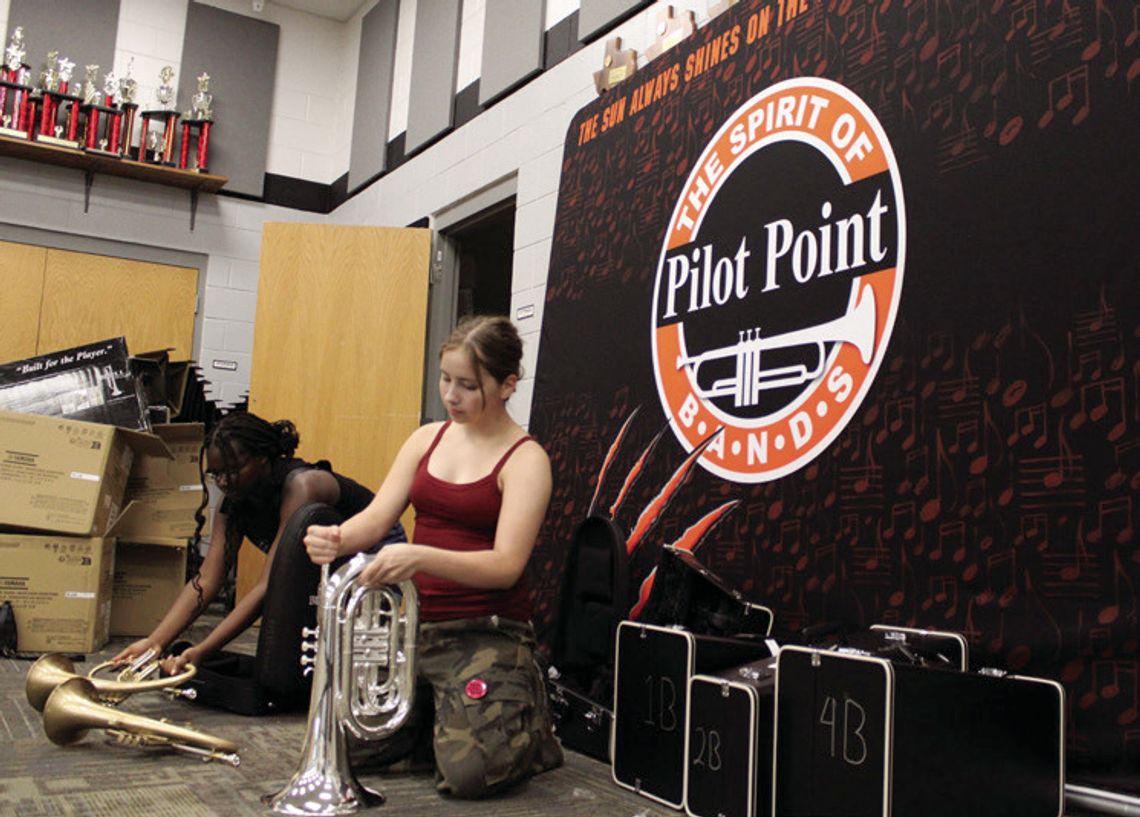
The band department received four new marching baritones, two flugelhorn instruments and marching mellophones that are on their way in time for the new season, as part of an effort to replace old instruments in the coming years.
“Pilot Point ISD is such a special place, … and I think even with the growth that we've gotten, that doesn't change; that's the foundation of who we are,” Fuller said. “Our goal is every year to make progress in everything that we do. And so far in the last two years, we've been able to lay a really good foundation for that. Even though most of us have been new in our entry in that, we have really been making such great progress, and I think this year, it's going to be phenomenal.”